
Upcycling is one of the most satisfying ways to furnish a home. Taking a tired, unloved piece and giving it a new life saves money, keeps good furniture out of landfill and results in something that is genuinely yours. It does not require a workshop or years of experience; many of the most effective projects can be completed in a weekend with basic tools.
The key is choosing the right piece to start with and matching the project to your skills and patience.
Choosing a Piece Worth Upcycling
The best candidates are solidly built pieces with good bones but dated or damaged finishes. Solid wood and good-quality veneers respond well to painting, sanding and refinishing. Check that joints are sound, drawers run and there is no active woodworm.
Chipboard furniture is harder to transform, as it does not sand well and swells when wet, though it can still be painted with the right primer. Genuinely valuable antiques and designer pieces should usually be restored sympathetically rather than painted, as heavy alteration can destroy their value.
Painting and Refinishing
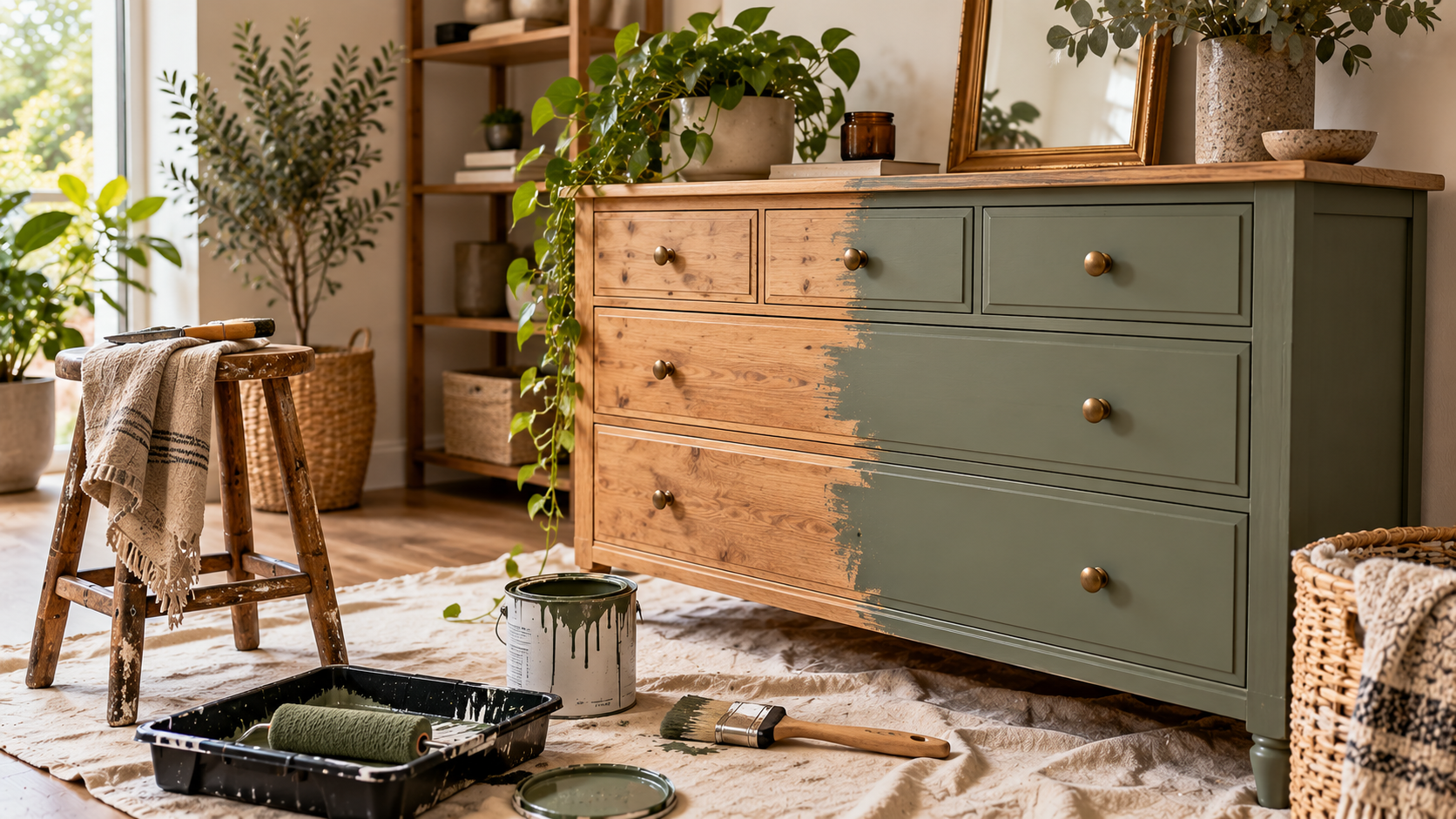
Painting is the most popular upcycling project and can completely change a piece. Preparation is everything. Clean the surface thoroughly, sand lightly to give the paint a key and use a suitable primer, particularly on varnished or laminated surfaces.
Chalk and mineral paints are forgiving and often need little preparation, while eggshell and furniture paints give a harder, more durable finish. Several thin coats are always better than one thick one. Finish with a wax or water-based varnish to protect surfaces that will see heavy use.
If the wood itself is attractive, stripping and refinishing it instead can reveal a beautiful grain. Sanding back an old dining table and oiling it, for example, can transform a dark, dated piece into something fresh and natural. Our guide to choosing a dining table (links to https://kalustofurniture.co.uk/choosing-a-dining-table/ – Dining: Article 3) explains which woods and finishes cope best with daily use.
Small Changes With Big Results
Not every project needs to be ambitious. Replacing handles and knobs is one of the quickest ways to update a chest of drawers, sideboard or wardrobe. Brass, leather, ceramic and wooden handles can all change the character of a piece dramatically.
Changing legs is another simple transformation. Many sofas, sideboards and cabinets use screw-in legs that can be swapped for tapered wooden or metal alternatives, giving a more modern, mid-century look.
Lining drawers with patterned paper, painting just the inside of a cabinet or adding a contrasting top to a painted piece are small touches that make furniture feel special.
Reupholstering Seats and Chairs
Drop-in dining chair seats are an ideal first upholstery project. They usually lift out from underneath, and a new layer of foam and fabric can be stapled in place in an afternoon. It is a great way to unify a set of mismatched chairs or refresh an old set, and our feature on mixing dining chairs shows how a shared fabric can tie different designs together.
Larger projects, such as armchairs and sofas, take more skill and time. Many community centres and colleges run upholstery courses, which are a good way to learn properly before tackling a treasured piece.
Whatever you take on, take photographs as you go, especially when dismantling anything. And remember that the imperfections of a hand-finished piece are part of its charm. Upcycled furniture tells a story, and that is precisely what makes it worth the effort.