
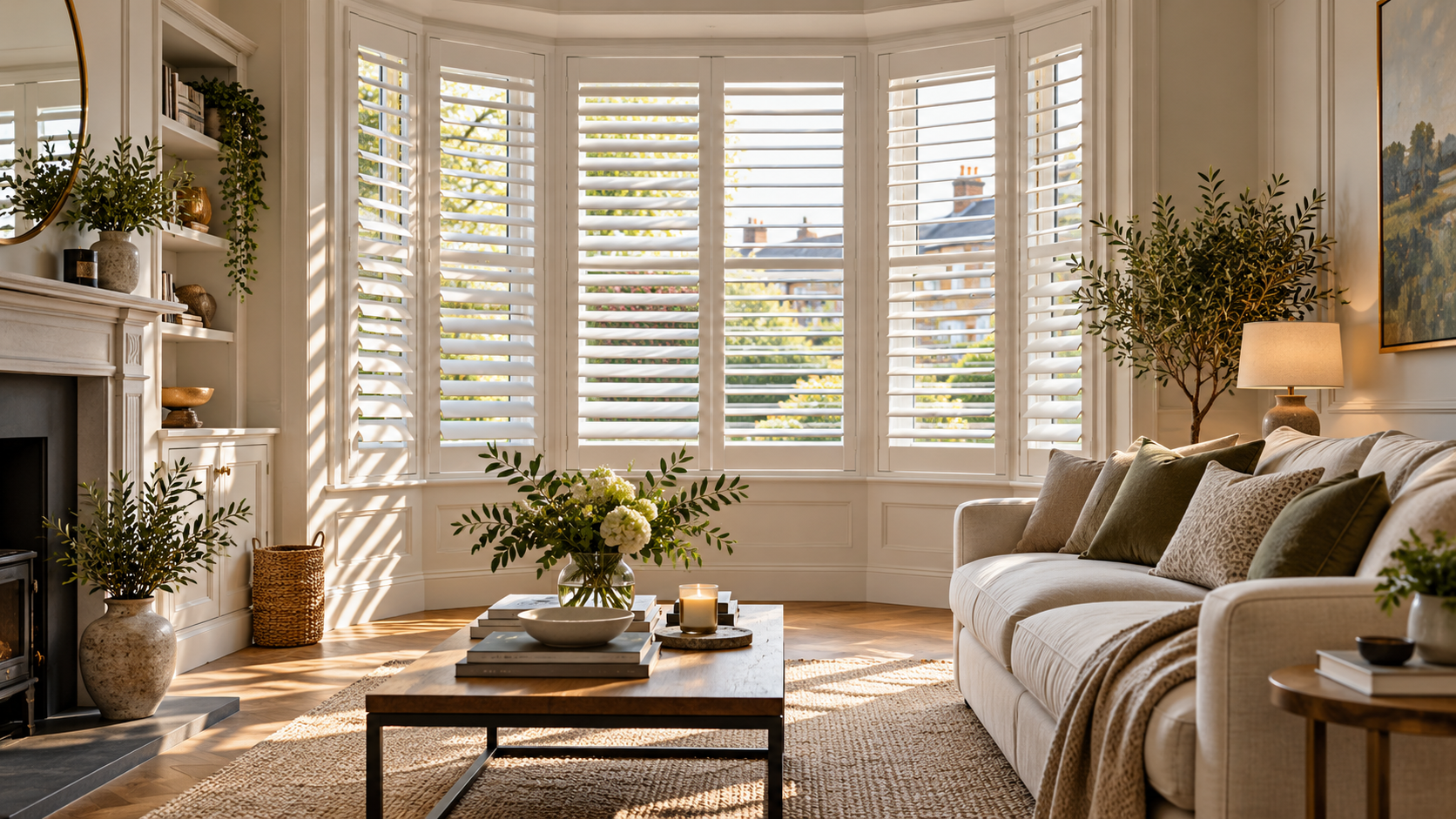
Interior window shutters have become one of the most popular window treatments in British homes. Once associated mainly with grand townhouses and Mediterranean villas, they now appear in terraces, semis and new-builds across the country. They look smart from both inside and out, and they offer a level of control over light and privacy that curtains and blinds struggle to match.
They are also a significant investment, usually costing more than other window coverings. So are they worth it? The answer depends on your windows, your rooms and what you want them to do.
The Benefits of Shutters
The biggest advantage of shutters is control. Adjustable louvres let you angle light exactly where you want it, flooding a room with daylight, softening glare on a screen or blocking the view from the street while still letting light in. Few other window treatments do all of this so easily.
Privacy is a major reason people choose them, particularly for street-facing rooms and bathrooms. Tilting the louvres upwards prevents passers-by from seeing in while still allowing daylight to enter.
Shutters also provide a degree of insulation. When closed, they add an extra layer between the glass and the room, helping to reduce draughts in winter and keep rooms cooler in summer. They also protect furniture, flooring and artwork from sun damage, which is particularly useful for leather and natural fabrics that fade.
Finally, they are durable and easy to care for. Good shutters can last for many years, need only occasional dusting and do not harbour dust and allergens in the way fabric curtains can.
Styles to Choose From
Full-height shutters cover the whole window with a single panel and are the simplest, cleanest look. Tier-on-tier shutters have separate upper and lower panels that open independently, so you can keep the bottom closed for privacy while opening the top for light. This is one of the most versatile options for street-facing rooms.
Café-style shutters cover only the lower part of the window, leaving the top uncovered. They are popular in kitchens, bathrooms and period properties where some privacy is needed but maximum light is wanted.
Solid shutters, without louvres, offer near blackout and are traditional in Georgian and Victorian homes. Tracked shutters slide or fold along a track and suit wide openings, patio doors and bi-fold doors.
Materials and Where They Work
Hardwood shutters are lightweight, strong and available in natural stains or painted finishes. They suit most living rooms and bedrooms.
MDF shutters are a more affordable option for dry rooms and are usually painted. They are heavier than hardwood and not suitable for damp areas.
Waterproof shutters made from PVC, ABS or similar materials are the best choice for bathrooms, kitchens and other rooms with humidity or condensation, as they will not warp or swell.
Shutters suit many window shapes, including bay windows, sash windows, tilt-and-turn windows and even unusual shapes such as arches and triangles. However, it is important to check that handles and window openings will not clash with the shutter frame, so a professional survey is always worthwhile.
The Drawbacks to Consider
Cost is the main downside. Shutters are made to measure and professionally fitted, so they cost more than most blinds and curtains. Lead times of several weeks are also common.
Even when fully open, shutters take up a little space around the window and the frame can reduce the glass area slightly, which may matter in small or dark rooms. Some people also miss the softness that curtains bring, though shutters can be combined with dress curtains for a layered look.
So, Are They Worth It?
For many homeowners, the answer is yes. Shutters combine light control, privacy, insulation and durability in a way few alternatives can, and they often outlast several sets of curtains or blinds. They also have strong kerb appeal and suit both period and modern homes.
They are less suitable where budget is tight, windows are very small or a soft, decorative look is the priority. As with any renovation decision, think about how the room is used, how much light it gets and how long you plan to stay.
When planning a room around new shutters, it is worth considering furniture placement too, as shutters work best when nothing blocks the panels from opening. Our guide to living room furniture layouts covers how to arrange a room around windows and walkways. And once the shutters are closed in the evening, your lamps take over, so our feature on choosing lamps and pendants is a useful next read.