
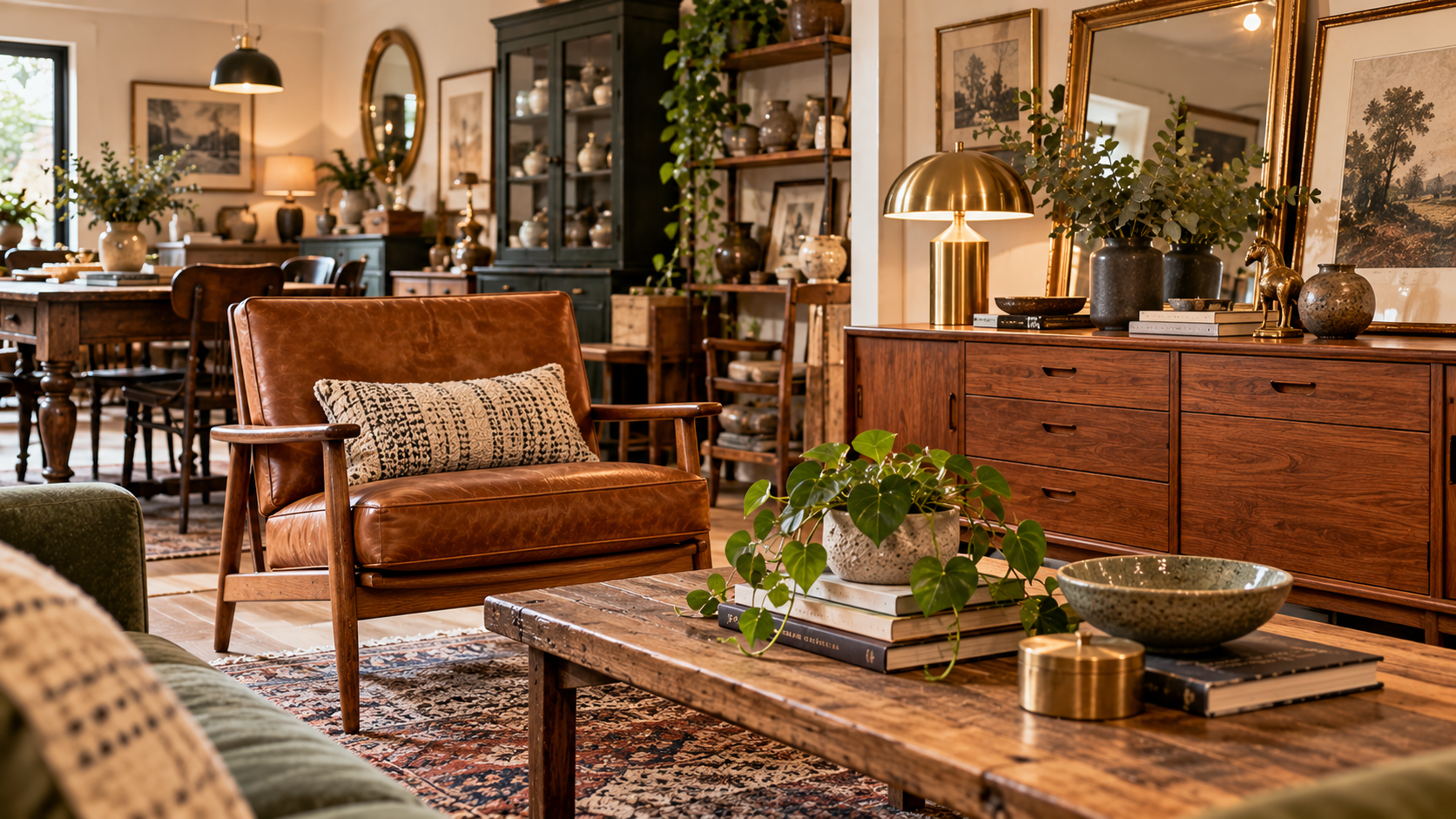
Second-hand furniture has shaken off its old image. Vintage pieces are now prized for their character, quality and sustainability, and buying pre-owned is one of the easiest ways to furnish a home with better-made furniture than a new budget would allow. A solid oak chest of drawers from an auction can cost less than a flat-pack equivalent and last several lifetimes longer.
But buying second-hand does require a little more care. Knowing where to look and what to check will help you find genuine bargains and avoid expensive mistakes.
Where to Look
Auction houses are often the best source of quality furniture at fair prices, particularly for brown furniture such as Victorian and Edwardian pieces, which remains undervalued. Many now hold online sales, but viewing in person is always worthwhile.
Antique and vintage shops offer curated stock, often cleaned or restored, at higher prices. Charity shops, particularly dedicated furniture stores run by larger charities, can hide real finds. Online marketplaces offer huge choice but mean you must inspect carefully when collecting.
Reclamation yards and house clearance firms are good sources of larger items, old doors, and industrial or commercial furniture with plenty of character.
Check the Structure First
Start by testing stability. Rock tables and chairs gently to feel for wobbles and loose joints. A slightly loose chair can be reglued, but a split leg or broken frame is a bigger job.
Open every drawer and door. Drawers should run smoothly, and dovetail joints are a sign of good construction. Look inside and underneath to see how a piece is made; this is where you will discover whether it is solid wood, veneer or chipboard. Solid timber shows continuous grain over edges and ends, while chipboard gives itself away on unfinished undersides.
Check for woodworm, which appears as small round holes with fresh, pale dust beneath them. Old holes with dark edges are often historic and inactive, but fresh dust suggests an active infestation that needs treatment.
Surface Faults and Upholstery
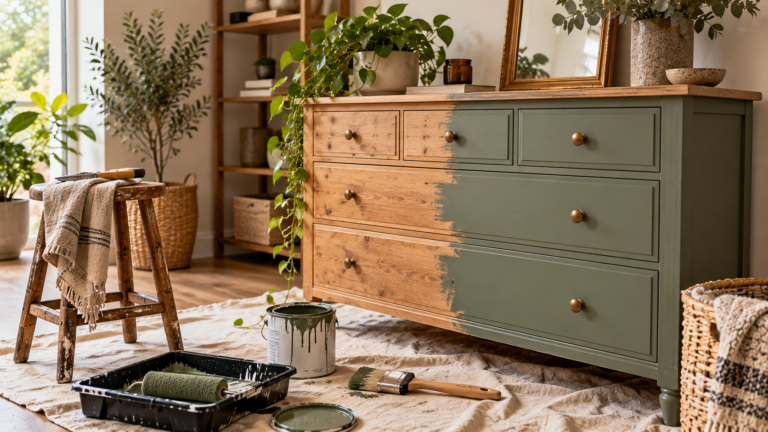
Scratches, water rings, sun fading and worn polish are common and usually cosmetic. Many can be improved with gentle cleaning, wax or a light refinish. Veneer that is lifting or missing is more complicated but can often be repaired by a restorer.
Upholstered furniture needs closer inspection. Sit on it, feel for broken springs or sagging webbing and check for musty smells, which can be difficult to remove. Older upholstered pieces must meet UK fire safety regulations if sold by a business (pieces made before 1950 are exempt), so look for a label. If buying privately, reupholstery with compliant materials may be advisable.
Price in the cost of any work you will need doing. A well-made chair that needs new fabric can still be excellent value, but only if you account for the upholstery bill.
Buying With Your Home in Mind
Always measure before you go, and take the dimensions of your rooms, doorways and stairs with you. Vintage furniture was often made for larger rooms or built to different proportions, so a beautiful wardrobe may not fit up a modern staircase.
Think about how the piece will work with what you have. Our guide to living room furniture layouts will help you plan where a new find should go, and if you are hunting for a dining table in particular, our feature on choosing a dining table covers the sizes and shapes that suit different rooms.
Finally, be patient. The joy of buying second-hand lies in the search, and the right piece is usually worth waiting for.