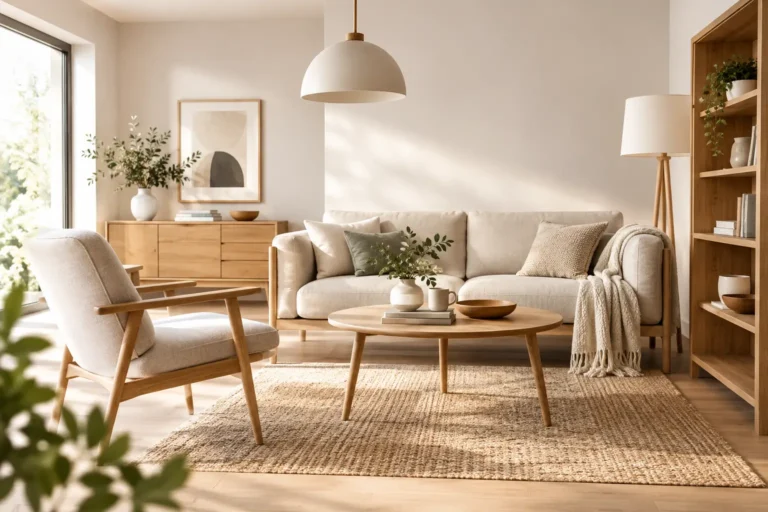

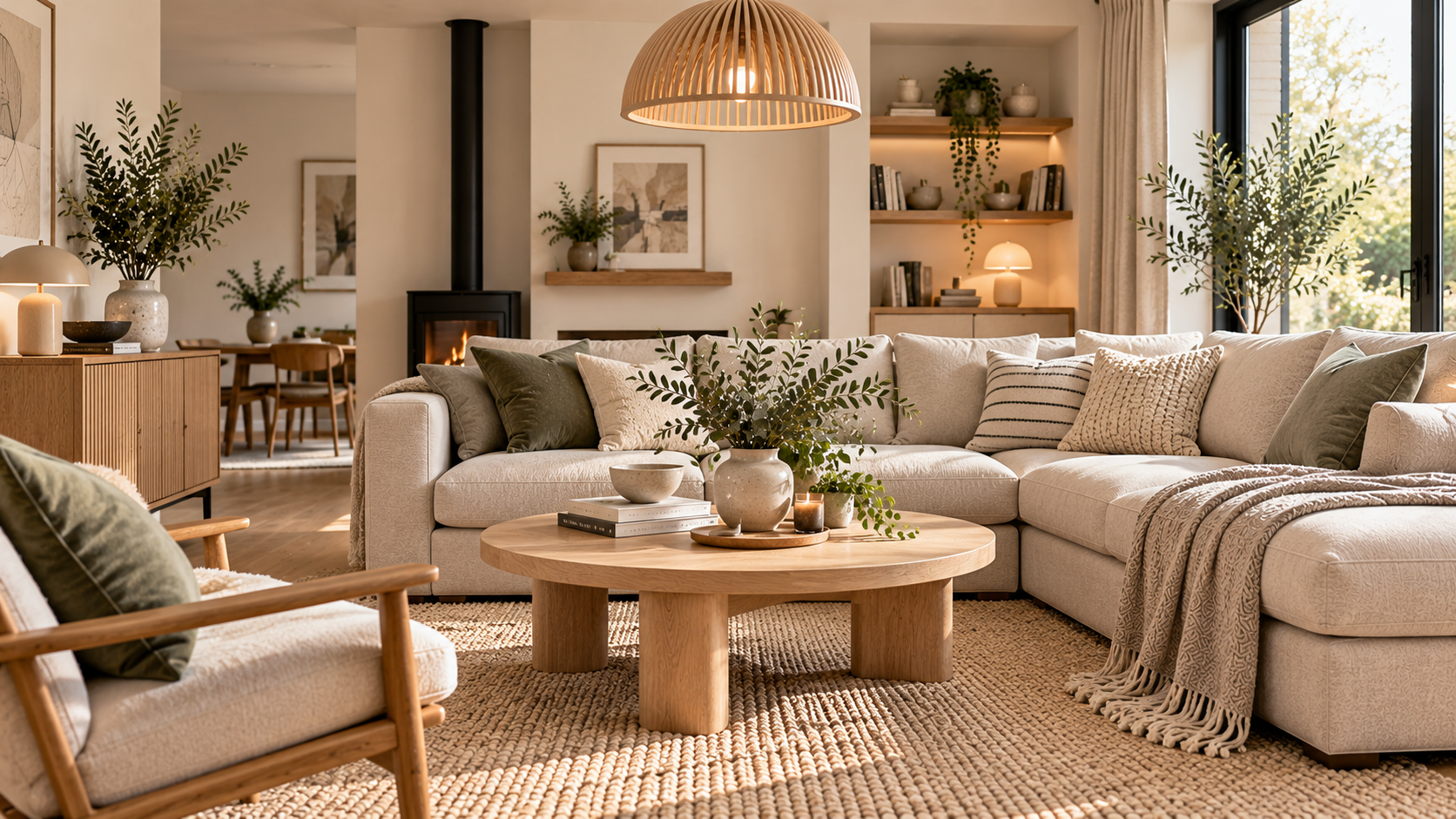
Nordic interiors have a quality that many people find instantly appealing: a sense of calm, warmth and order that makes a home feel restful rather than busy. The Danish idea of hygge and the Swedish concept of lagom, meaning “just the right amount”, have become familiar terms in Britain for good reason.
But British homes are not Scandinavian homes. Victorian terraces, 1930s semis and new-build flats come with their own proportions, light and quirks. The trick is not to copy a Copenhagen apartment wholesale but to borrow the principles that make Nordic interiors work.
Make the Most of Natural Light
Scandinavian homes are designed to capture every bit of daylight during short winter days. In Britain, where grey skies are common, the same approach pays dividends.
Keep window treatments light and simple, using linen or sheer curtains, or blinds that disappear when raised. Interior shutters are another good option, letting you angle the slats to let light in while keeping privacy, and our feature asking are interior window shutters worth it weighs up the pros and cons. Avoid blocking windows with large furniture. Pale walls reflect light further into a room, and mirrors placed opposite or beside windows can bounce daylight into darker corners.
After dark, replace a single overhead light with several warm, low sources. Candles, table lamps and soft wall lights create the gentle, inviting glow that is central to the Nordic feeling of comfort.
Choose Warm Minimalism, Not Cold Emptiness
Nordic style is often mistaken for stark minimalism, but it is far warmer than that. The aim is not an empty room but one where everything has a purpose and a place.
Start by editing. Clear surfaces of clutter, find proper homes for everyday items and let a few favourite objects breathe. Closed storage, such as sideboards and cabinets, keeps visual noise down.
Then add warmth through texture. Sheepskins, wool blankets, linen bedding, woven baskets and ceramic pieces soften clean lines and make a room feel lived in. Plants bring life and colour without clutter.
Natural Materials and a Soft Palette
Wood is essential, whether in floors, furniture or small accessories. Pale oak, ash and birch are classic choices, but any honest, natural timber fits the approach. Mixing wood with wool, linen, leather, stone and glass creates a layered, tactile interior.
For colour, a base of warm whites, soft greys and gentle neutrals works well in British light, which tends to be cooler than people expect. Earthy accents such as sage, ochre, dusty blue and terracotta add character without disturbing the calm.
In north-facing rooms, choose whites with a warm undertone rather than brilliant white, which can look grey and flat in British daylight.
Arrange for Comfort and Togetherness
Nordic living rooms are designed for gathering. Seating is arranged to encourage conversation rather than simply facing a screen, and there is usually a comfortable spot for reading, often a chair beside a window with a lamp and a small table.
A deep, inviting sofa is the heart of this kind of room, so it pays to choose carefully. Our guide to choosing the right sofa explains what to look for, from seat depth to frame and filling.
Above all, Nordic calm is about slowing down. A home that is easy to tidy, gently lit and filled with things you love is the best foundation for it, whatever the age or style of your house.