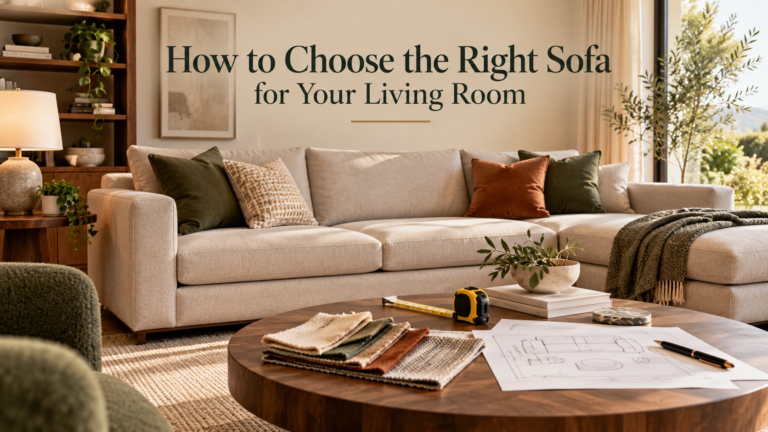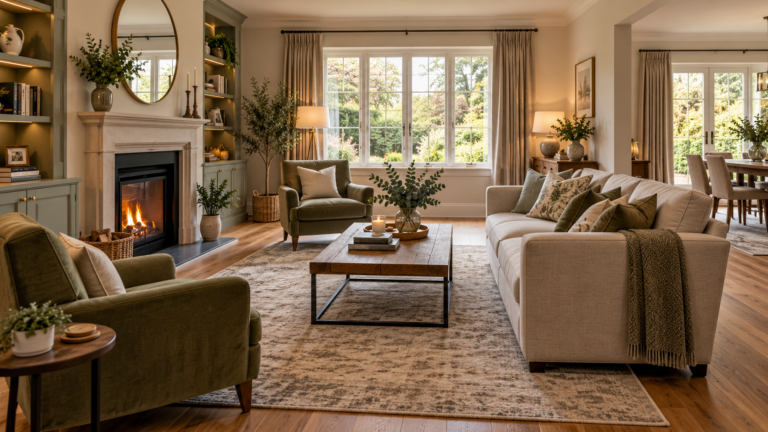

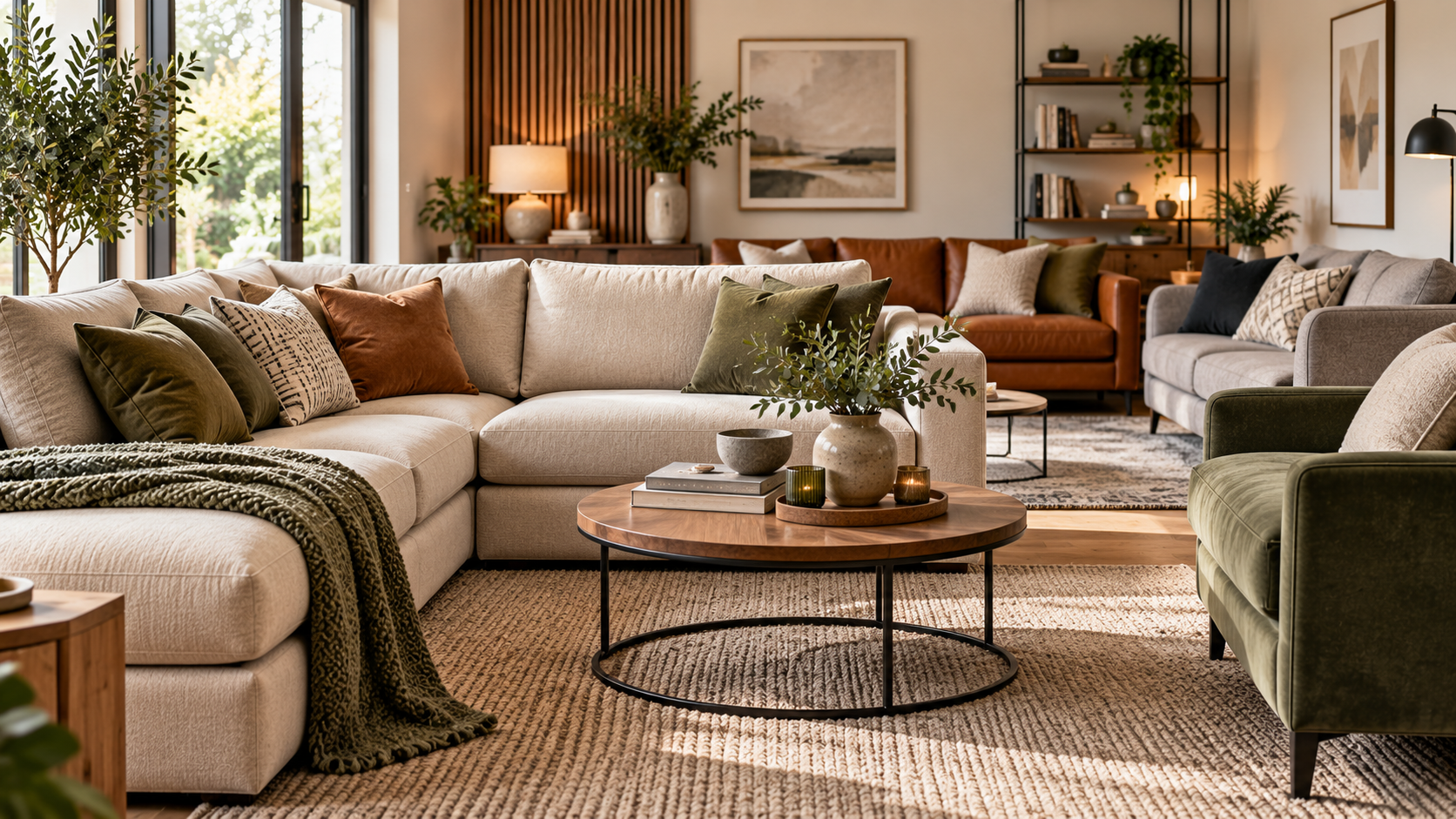
A sofa is usually the largest and most expensive piece of furniture in a living room, and it is also the one you will use every single day. It sets the scale of the room, decides where everyone sits and often dictates the colour scheme around it. Get it right and the room falls into place. Get it wrong and you are left with something that either swallows the space or leaves it feeling oddly empty.
The good news is that choosing well is less about following trends and more about asking a handful of honest questions before you ever set foot in a showroom.
Start With the Room, Not the Sofa
Measure the room properly, then measure the route into it. Doorways, stairwells, tight landings and awkward corners have defeated more sofa deliveries than anything else. Note the width of every door the sofa will pass through, and the height of any turn on a staircase.
Next, think about proportion. As a rough rule, a sofa should take up no more than about two thirds of the wall it sits against, leaving space either side for a side table, a lamp or simply some breathing room. In a narrow room, a deep sofa can eat into the walkway; in a large, open-plan space, a small two-seater can look lost unless it is anchored with a rug and a pair of chairs.
It helps to mark out the footprint on the floor with masking tape and live with it for a day or two. You will quickly see whether you can still walk comfortably past it and open the doors around it.
Seat Depth, Height and How You Really Sit
Comfort is personal, and the most important measurement is one many people ignore: seat depth. A deep seat is lovely for curling up with your legs tucked under you, but shorter members of the household may find their feet do not reach the floor. A shallower, more upright seat suits people who like to sit properly, read or get up easily.
Seat height matters too, especially for older relatives. A low, lounge-style sofa looks sleek but can be a struggle to get out of. Try to sit on any sofa for at least ten minutes before you buy, in the position you would actually use at home, rather than perching on the edge for a few seconds.
Think about the back as well. Tight backs look tailored and stay neat. Loose scatter-back cushions are softer and more relaxed, but they need plumping daily to stay looking good.
Frame, Springs and Fillings
What you cannot see is what determines how long a sofa lasts. A kiln-dried hardwood frame is the gold standard, as it resists warping and holds joints firmly. Cheaper frames made from particleboard or softwood can creak and loosen within a few years.
Underneath the cushions, look for sprung seats rather than simple webbing. Pocket springs or traditional coil springs give better support over time, while serpentine springs are a sensible mid-range option.
Cushion fillings are a trade-off between comfort and maintenance. Foam holds its shape and needs little attention. Feather is sink-in soft but flattens without regular plumping. A foam core wrapped in fibre or feather is a popular middle ground. If you are unsure what you are looking at, ask the retailer for a full specification sheet before committing.
Fabric, Colour and Living With It
Upholstery is where lifestyle should lead. Households with children, dogs or cats need tough, tightly woven fabrics or performance finishes, and removable, washable covers are worth their weight in gold. Leather wears well and wipes clean but can feel cold in winter and sticky in summer. Velvet looks luxurious but shows marks and wear patterns.
Neutral colours are the safe choice for a long-term investment, as they allow you to change cushions, throws and rugs as your taste shifts. A bolder colour can become the focal point of a room, but choose it only if you are sure you will still love it in five years.
Finally, consider the sofa in context. How it looks after dark matters as much as how it looks in daylight, so think about where your lamps will sit and how light will fall across the fabric. Our feature on layered lighting is a good place to start. And if your sofa is the fixed point in a room of mixed seating, you may also find our piece on mixing dining chairs useful, as the same principles of balancing shape, colour and material apply throughout the home.