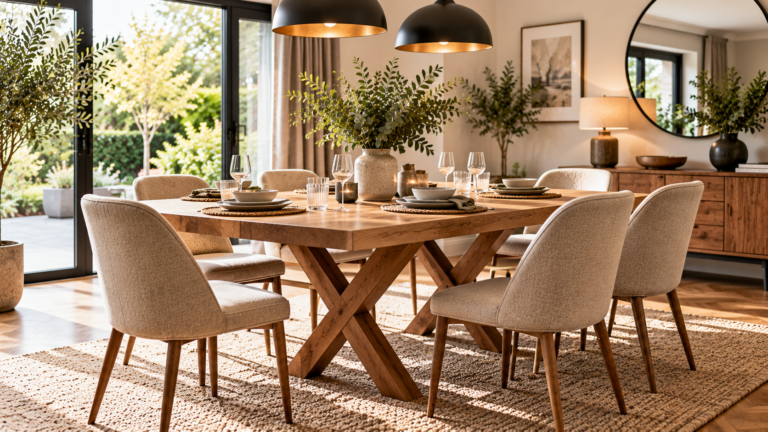

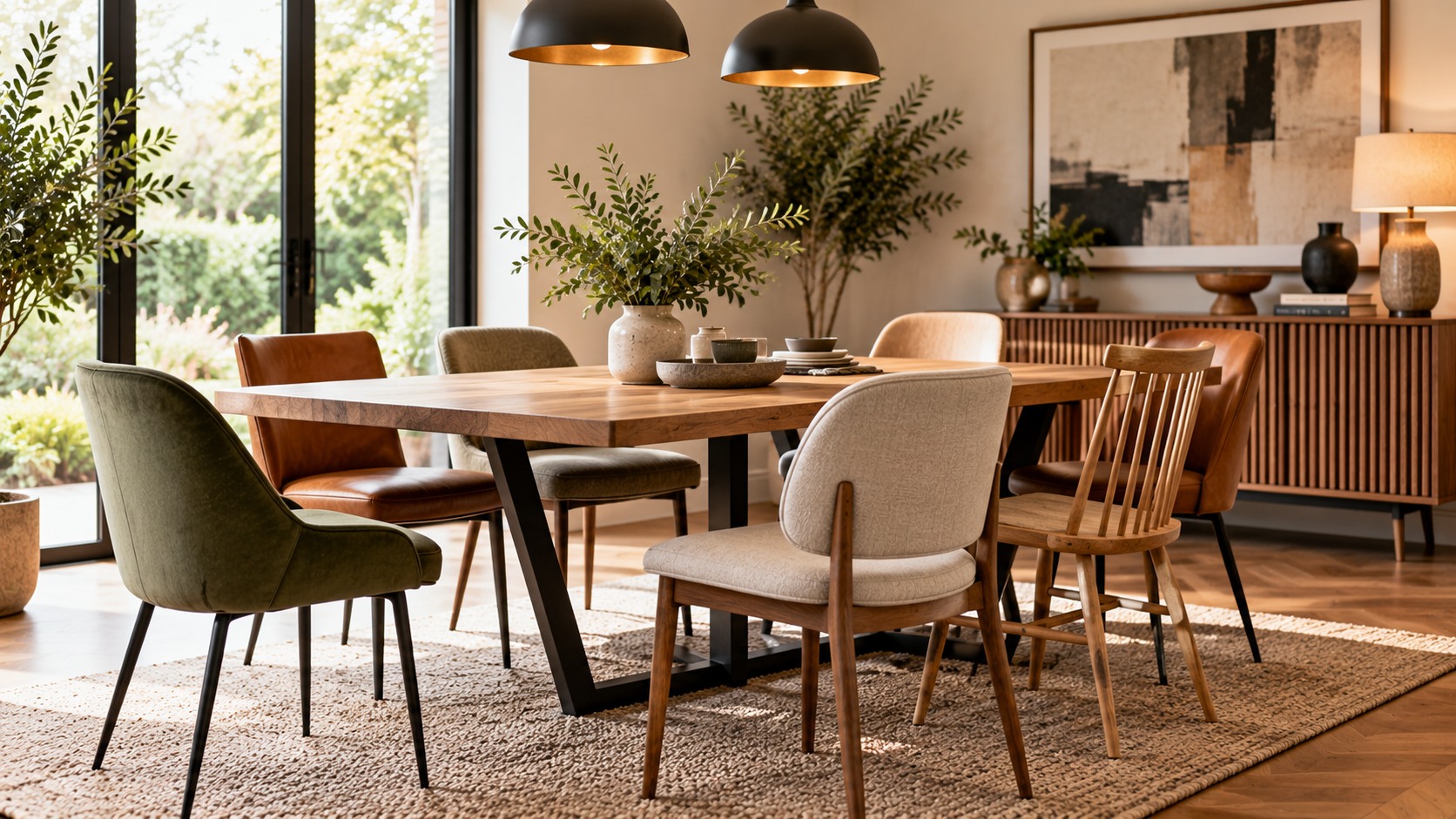
Matching dining sets have their place, but a table surrounded by mismatched chairs can bring real character to a room. It feels relaxed, personal and collected over time rather than bought in a single afternoon. It is also a practical way to furnish a dining space gradually, rescue family pieces or make use of beautiful single chairs found second-hand.
The difference between a look that feels curated and one that feels like a jumble sale comes down to a few simple principles.
Choose One Thing to Unify
The easiest way to make mixed chairs work is to keep one element consistent. That might be colour, where chairs of different shapes are painted or upholstered in the same shade. It might be material, such as a set of different wooden chair designs all in a similar tone. Or it might be shape, with the same chair design used in several colours.
Once one thread ties the group together, everything else can vary. Without that thread, the eye struggles to read the chairs as a set, and the table can look unfinished.
Keep Heights and Proportions Close
Practicality should never be sacrificed for style. Seat heights need to be broadly consistent so that everyone sits comfortably at the table, and a difference of more than a couple of centimetres is noticeable over a long meal.
Visual weight matters as well. A chunky, high-backed chair beside a delicate spindle chair can look unbalanced. Try to keep the overall scale of the chairs similar, even if the designs differ. If one chair is noticeably bulkier, give it a partner of similar weight on the opposite side of the table so the arrangement feels symmetrical.
Use Head Chairs and Benches
One of the most popular approaches is to use matching chairs along the sides of the table and a different pair at each end. Carver chairs with arms, upholstered chairs or something bolder in design make natural head-of-table pieces and give the arrangement a clear structure.
Benches are another useful tool. A bench along one side of the table pairs well with individual chairs on the other, is great for families with children and tucks away neatly when not in use. A bench also reads as a single calm element, which helps balance a more varied row of chairs opposite.
Think About Materials and Finishes
Mixing materials adds depth, but it helps to stay within a family. Warm woods sit comfortably together, as do painted finishes in a restrained palette. Metal and moulded plastic chairs can work alongside wood, but they usually look best when they share a colour with something else in the room.
Wood tones deserve particular care. A mix of very different woods can clash, so either choose tones that are clearly distinct and deliberate or keep them within the same warm or cool family.
Upholstered seats are a good way to bring cohesion to otherwise different frames. Covering every seat pad in the same fabric instantly links the set together, and it is a simple job to update later. Leather seats are another option for busy households, and our guide to leather vs fabric sofas sets out the pros and cons of each material, which apply just as much to dining chairs. For advice on fabrics that stand up to spills and daily use, see our feature on upholstery fabrics.
Build the Look Slowly
The most convincing mixed sets are rarely assembled in one go. Start with a table you love and two or four chairs, then add pieces as you find them at auctions, antique shops or online marketplaces.
Stand back after each addition and look at the arrangement as a whole. If one chair seems to shout louder than the rest, try moving it to the head of the table or swapping it into another room. With a little patience, the result will feel far more personal than any matching set.