

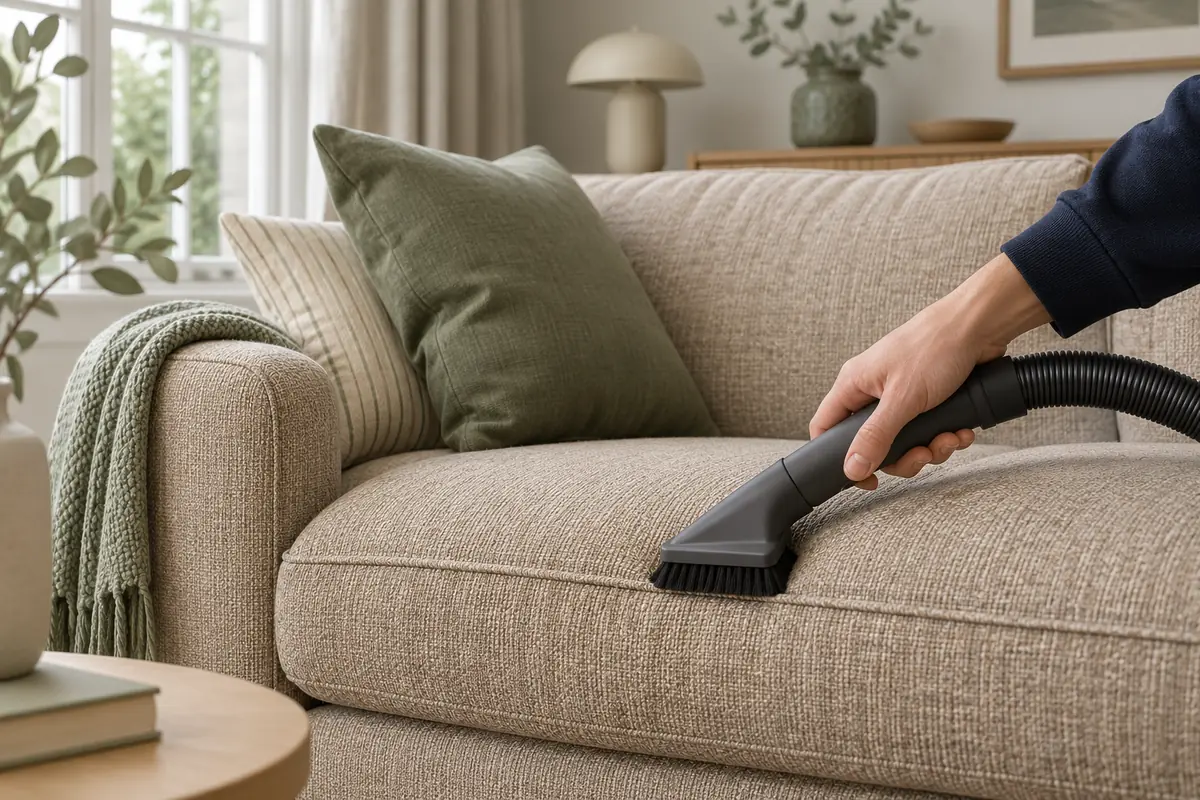
The sofa gets more daily use than almost anything else in the house, so it picks up crumbs, dust, skin oils and the odd spilled cup of tea. The good news is that most of the upkeep is simple. If you want to know how to clean an upholstered sofa without ruining it, start with the label, keep up a light weekly routine and act quickly when something goes wrong.
Check the care label first
Lift a seat cushion or look under the frame and you will usually find a small care label. It carries a letter code that tells you what is safe to use. Ignore it and you risk water marks, shrinkage or colour loss.
- W: water-based cleaners are fine. A mild upholstery shampoo or a little washing-up liquid in water will do.
- S: solvent-based cleaners only. Do not use water, which can leave stains and stiffen the fabric.
- WS: either water-based or solvent-based products can be used.
- X: vacuum or brush only. No liquids of any kind.
Not all fabrics behave the same way, and the label is the quickest guide. If you are curious about why, our piece on how different upholstery fabrics behave explains what each type can and cannot take. If there is no label at all, treat the sofa cautiously and test everything on a hidden patch first.
A simple weekly routine
Little and often beats a big clean twice a year. Once a week, vacuum the whole sofa using the soft brush attachment. Go along the seams, under the cushions and down the sides, where crumbs and grit collect. Grit matters because it wears fabric down as you sit.
Plump back cushions to bring the filling back to shape. If the seat cushions are reversible, turn them over. If they are not, swap their positions. On a three-seater, the middle spot is often the least used, so moving cushions around spreads the wear evenly.
Every few months, give the sofa a proper going-over. Pull out the cushions, vacuum the frame and wipe any wooden or metal legs with a damp cloth.
Deal with spills straight away
Speed is the best stain remover. As soon as something spills, blot it with a clean, dry, white cloth or kitchen roll. Press down and lift. Do not rub, because rubbing pushes the liquid deeper and can roughen the fabric.
Once you have soaked up what you can, check the care code and spot-clean accordingly:
- Test your cleaner on a hidden area, such as the back or underside, and let it dry.
- Dab the stain from the outside edge towards the centre, so it does not spread.
- Use a barely damp cloth rather than a wet one. Soaking the fabric can leave a ring.
- Blot dry with a clean cloth, then leave the area to dry naturally.
Avoid hairdryers, which can set stains and shrink some fabrics. For a greasy mark on an S-coded sofa, a dry-cleaning solvent made for upholstery is the right choice. Follow the instructions on the bottle and keep the room well ventilated.
Keep it away from sun and radiators
Direct sunlight fades fabric over time, and you will notice it first on the arms and the side nearest the window. If you can, position the sofa out of the strongest light, or use curtains or blinds during bright afternoons.
Heat is just as unkind. A sofa pushed against a radiator can dry out, and some fabrics will stiffen or discolour. Leave a gap of a few inches if the room allows it. The same goes for fires and heaters.
Pet hair and smells
Pet hair weaves itself into fabric, so vacuuming alone may not lift it all. A rubber glove, slightly damp, drawn across the surface will gather stubborn hair into clumps you can pick off. A lint roller works for lighter coverage.
For odours, sprinkle bicarbonate of soda over dry fabric, leave it for several hours, then vacuum it away. Check the care label first, and test a small hidden patch if you are unsure. Throws and washable covers on favourite spots save a lot of effort, and you can simply put them through the machine.
Choosing the right material matters too. If you are still deciding what to buy, our guide to leather and fabric sofas compared covers how each copes with family life, pets and spills.
When to call a professional
Some jobs are better left to a specialist. If the sofa is marked X, if it is made of delicate fabric such as velvet or silk, or if a large stain has set in, a professional upholstery cleaner is the safer option. The same applies to strong smells that have soaked into the filling, and to sofas that are old, valuable or sentimental.
A cleaner will know which method suits your fabric and can often lift marks that home treatments only make worse. When in doubt, a quick phone call is cheaper than replacing a damaged sofa.
Habits that make a sofa last
- Check the care label before cleaning anything.
- Vacuum weekly, including under and between the cushions.
- Plump and turn or swap cushions regularly.
- Blot spills straight away. Never rub.
- Test every cleaner on a hidden patch first.
- Keep the sofa out of strong sunlight and away from radiators.
- Use throws or covers where pets or children sit most.
- Avoid eating and drinking on it where possible, and wash hands before settling in.
Call a professional for X-coded fabrics, delicate materials and stubborn stains.